

Every year, thousands of accidents occur on Indonesia's toll roads. Not on narrow village paths, nor at intersections without traffic lights—but on the very roads specifically designed to make travel faster and safer.

The paradox is real: highways are the roads with the highest accident fatality rates. Constant high speeds, inflated driver confidence, and the frequent disregard for safe following distances — this combination transforms the fastest route into the most dangerous one.
This article wasn’t written to scare you. It was written so that you, or anyone planning a road trip, a holiday trek (mudik), or a daily commute, have a solid foundation of knowledge before hitting the gas. The following five rules aren’t academic theories. These are concrete practices you can apply immediately, and they are proven to save lives.
Rule 1: Watch Your Speed & Keep Your Distance
This sounds cliché. But ask yourself: when was the last time you actually maintained a three-second following distance behind the vehicle in front of you?
Based on the regulations applicable in Indonesia, the speed limit on inner-city toll roads is a minimum of 60 km/h and a maximum of 100 km/h. On outer-city toll roads, the maximum limit increases to 110 km/h. These are not mere suggestions—they are laws enshrined in Government Regulation Number 79 of 2013.
What is often ignored is the rule regarding safe following distance. The simplest way to measure it is the “3-second method”: pick a fixed point ahead (such as a sign or a tree). When the vehicle in front of you passes it, start counting: “one thousand and one, one thousand and one, one thousand and three.” If your vehicle passes that same point before you finish counting, you are following too closely.
Why is this important? At a speed of 100 km/h, the emergency braking distance can exceed 70 meters. If you are distracted for just one second—whether by glancing at your phone, being startled, or feeling drowsy—your vehicle has already traveled nearly 28 meters without any response at all.
One additional note: during heavy rain, thick fog, or nighttime driving, automatically reduce your speed by 20–30% from the maximum limit. Road conditions can change drastically; a speed that is safe on a clear day is not necessarily safe in the rain.
Rule 2: Master Your Lane — Drive Left, Overtake Right.
On Indonesian toll roads, there are very clear rules regarding lane usage, yet they are frequently ignored: the right lane is strictly for overtaking, not for cruising.
The Core Rule
The logic is simple: use the left lane as your normal driving lane. Move to the right only when you intend to pass a vehicle in front of you. Once you have finished overtaking, immediately return to the left lane.
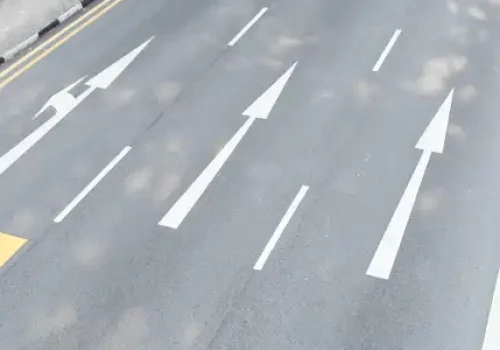
The Problem with “Lane Hogging”
The issue is that many drivers feel comfortable “camping” in the right lane at moderate speeds. While this might seem harmless, the consequences are serious: drivers behind who wish to go faster are forced to overtake from the left. This maneuver is significantly more dangerous because it is unexpected and often occurs within the leading vehicle’s blind spots.
Essential Safety Steps
Before changing lanes, always perform these two actions:
Check your mirrors: Look at both your left and right mirrors.
The Shoulder Check: Briefly glance over your shoulder to ensure no vehicles are hiding in your blind spot.
Note: Ensure your mirrors are adjusted correctly before you start your journey; many drivers are unaware that their mirror positions are suboptimal.
Legal Consequences and Ethics
Lane violations are regulated under Article 108 of the Law on Traffic and Road Transportation. Violators can face traffic tickets and fines. However, far more important than legal sanctions is the principle behind it: lane discipline is a form of respecting the lives of others on the road.

Rule 3: Never Drive While Drowsy
This isn’t an exaggeration. This is one of the most dangerous—and most underestimated—causes of accidents.
Microsleep—falling asleep unconsciously for 2 to 3 seconds—is a silent killer on the highway. At a speed of 100 km/h, 3 seconds of microsleep means your vehicle travels more than 80 meters without anyone in control. No brakes are fast enough. No reflexes can compensate for it.
The danger lies in the fact that microsleep happens without warning. You won’t realize you’ve fallen asleep until it’s too late. Therefore, recognize the warning signs before you get to that point:
Heavy eyelids.
Frequent yawning in a short period.
Your head starts nodding involuntarily.
The road lines begin to blur or blend together.
If any of these happen, it isn’t a signal to turn up the music; it’s a signal to stop immediately.
The Golden Rule of Driving
Every 2 hours of driving, stop for at least 15–20 minutes at a rest area. Get out of the car, walk around, and drink some water. If possible, take a power nap for 15–20 minutes before continuing your journey.
A Note on Coffee
Caffeine helps delay drowsiness, but it doesn’t eliminate it. The only way to truly overcome sleepiness is sleep. Do not rely on coffee or energy drinks to power through a long trip.
Rule 4: Zero Tolerance. Phones Down, Eyes Up.
Imagine closing your eyes for 5 seconds while driving at 100 km/h. You would travel nearly the length of a football field without seeing a thing. That is exactly what happens when you glance at your phone, even for a moment, even just to read a notification.
Digital distraction has been one of the fastest-growing causes of accidents over the past decade. And it’s not just about texting. Research shows that phone conversations—even when using hands-free devices—significantly reduce driving concentration. Your attention is divided, even when your hands remain on the wheel.

The best solution isn’t about willpower; it’s about having a system. Before you head out:
Enable the “Do Not Disturb” feature on your phone.
Set up your music playlist or podcast before the car starts moving.
Set your GPS navigation while parked, not in the middle of the road.
If you have passengers, designate one person as the official navigator to monitor the route and reply to incoming messages.
Article 283 of the LLAJ Law (Traffic and Road Transport Law) prohibits phone use while driving, carrying a maximum fine of Rp750,000 or 3 months in prison. However, the cost of a fine is meaningless compared to the consequences of a single moment of distraction on the highway.

Rule 5: Check Your Vehicle Before You Hit the Highway
Many drivers assume vehicle maintenance is strictly for the mechanics. In reality, the majority of preventable highway accidents stem from minor oversights before the engine even starts.
Before you hit the fast lane, ensure these seven essential points are checked:
Tires – Verify pressure meets manufacturer recommendations; check for cracks or bulges.
Brakes – Ensure pedal response is firm and there are no grinding noises.
Lights – Confirm all lights are functional: headlights, taillights, turn signals, and hazards.
Wipers – Essential for visibility, especially with unpredictable weather.
Radiator Coolant – Ensure levels are above the minimum threshold.
Fuel – Never enter a toll road with a near-empty tank.
Seatbelts – Mandatory for all passengers, including those in the rear seats.
Driving a Rental? Take Extra Care.
When using a rental car, always ask for the latest service record before departing. Unfamiliar vehicles require an adjustment period. Test the brake feel and steering response in a safe area before accelerating to highway speeds.
In Case of Emergency
If you experience a tire blowout or engine failure on the highway, remember these three critical steps:
1. Activate Hazard Lights: Signal your situation immediately to other drivers.
2. Move to the Shoulder: Gently guide your vehicle to the emergency lane.
3. Deploy Safety Triangles: Place your warning triangle at least 50 meters behind your vehicle, then contact the highway emergency services at 14017.
Pro Tip: Safety isn’t just a rule; it’s a responsibility. A five-minute check can be the difference between a smooth journey and a roadside crisis.
Bonus: 3 Seemingly Innocent Habits With Deadly Consequences
Beyond the five main rules, there are three habits often taken lightly — yet they contribute significantly to highway accident rates.
First: Overtaking from the shoulder. The hard shoulder is not an alternative fast lane. It is an emergency zone reserved for broken-down vehicles, ambulances, and highway patrols. Overtaking from the shoulder is not only illegal — it is extremely dangerous because you are suddenly appearing from an unexpected side.
Second: Failing to turn on lights during rain or at night. Many drivers feel it is unnecessary to turn on their lights during daytime rain because they can still see the road. However, lights are not just for you to see — they are so you can be seen by others. In low-visibility conditions, your taillights are the difference between the driver behind you reacting in time or not.
Third: Ignoring your vehicle’s own signals. Unusual vibrations while driving, brake sounds that differ from the norm, or a steering wheel that feels heavier — these are not things that can “wait until the next rest area.” These are signals from your vehicle that something needs to be checked immediately. Pull over to the shoulder, activate your hazards, and call for assistance.
Safety Driving Starts with You
These five rules are not a burdensome list of prohibitions. They are the mindset of a responsible driver—one who understands that at highway speeds, there is no room for even the slightest negligence.
Safe driving readiness begins before the engine even starts: a vehicle in top condition, a fit physical state, and a conscious decision to obey rules proven to save lives.
At Otodeck, every fleet vehicle we prepare undergoes regular condition checks—because we believe a good journey starts with a vehicle you can trust. You have only one task: apply the five rules above, and arrive at your destination safely.
Plan your journey with Otodeck — well-maintained fleet, safe travels.
To keep your road trip safe, check out:

 English
 Indonesian
Comment